

Generator Installation in Monroe, WA
Keep your home powered when the grid goes down. We install standby generators, transfer switches, and portable generator hookups — with permits and inspections handled for you.
- Licensed & Bonded
Fully licensed electricians for safe, code-compliant generator connections
- Permits Included
We handle all electrical permits and coordinate the final inspection
- 5-Star Rated
Consistently rated 5 stars by Snohomish County homeowners on Google
When the Power Goes Out, Everything Stops
Pacific Northwest storms knock out power more often than most homeowners expect. A single extended outage can mean spoiled food, frozen pipes in winter, no sump pump during flooding, and days without heat or hot water.
- Extended outages are more common — Snohomish County sees multi-day outages from windstorms, ice storms, and fallen trees every year.
- No power means real consequences — spoiled food, no heat, no well pump, no sump pump, and no way to work from home.
- Portable generators without a transfer switch are dangerous — backfeed through your panel can electrocute utility workers and start fires.
- A properly installed generator keeps everything running — standby units start automatically. Portable setups with a transfer switch are safe and code-compliant.
Benefits of Backup Power
Automatic Power Restoration
Standby generators detect the outage and start within seconds — no need to be home, no manual startup, no interruption.
Protect Your Home
Keep the sump pump running during floods, prevent frozen pipes in winter, and maintain your security system through any outage.
Safe, Code-Compliant
A transfer switch isolates your generator from the grid — preventing dangerous backfeed. Required by code, installed by us.
Protect Against Loss
A single extended outage can cost hundreds in spoiled food, hotel stays, and lost remote work days. A generator pays for itself.
Peace of Mind Year-Round
Storms, heat waves, equipment failures — you're covered no matter what knocks out the grid.
Increase Home Value
A whole-house generator is a major selling point, especially in rural areas where outages are more frequent.
Our Process
Site Assessment & Sizing
We evaluate your electrical panel, determine your critical loads, and recommend the right generator size. We walk you through standby vs. portable options.
Installation & Connection
We install the transfer switch, connect the generator, run any needed circuits, and handle the gas line coordination. All work is done to code with permits pulled.
Testing & Walkthrough
We test the full system under load, coordinate the city inspection, and show you exactly how your backup power works — including startup, maintenance, and monitoring.
Client Testimonials
"Trevor was friendly, happy to answer all our questions, and thoroughly went over everything. We received a competitively priced estimate the next day. After the installation, Trevor walked us through how our new system worked. We'd hire them again in a minute!"
"Ryan and his team provided excellent service and prompt communication. Even when equipment was defective, Luke, Isaac, and Trevor went above and beyond to troubleshoot and get us up and running. Highly recommended."
"They showed up when they said they would, got the work done, cleaned up, and had fair prices. These guys were great."
Common Questions About Generator Installation
Everything you need to know about backup power for your home. Don't see your question? Give us a call.
Contact UsHow much does a generator installation cost?
A portable generator with a transfer switch typically costs $1,500–$3,000 for the electrical work (generator not included). A full standby generator installation — including the transfer switch, pad, and gas line coordination — ranges from $6,000 to $11,000 depending on size.
What size generator do I need for my house?
It depends on what you want to power. A 10–14 kW generator covers most essential circuits — furnace, refrigerator, lights, sump pump, and a few outlets. A 20+ kW generator can power an entire home including AC and electric range. We calculate your specific load during the assessment.
What's the difference between a standby and a portable generator?
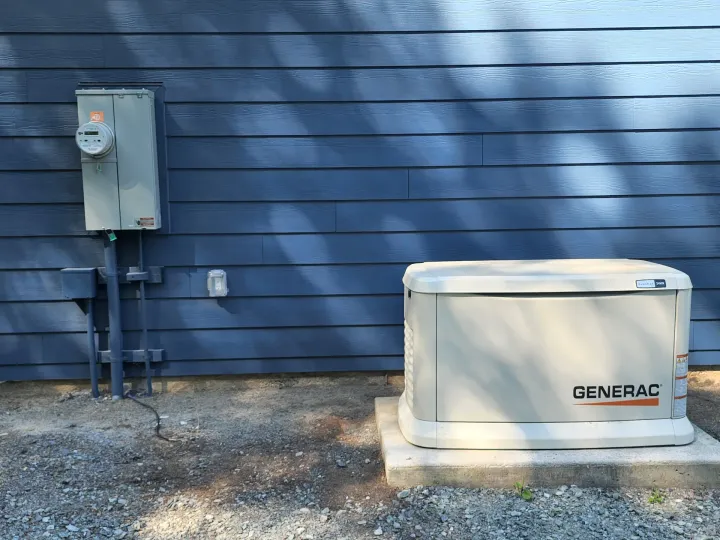
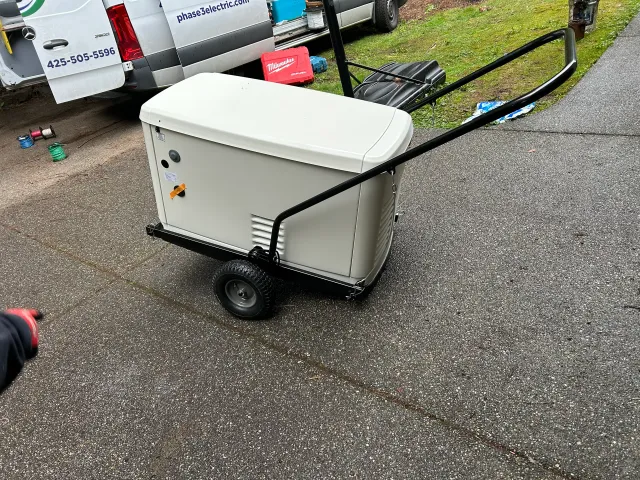
A standby generator is permanently installed outside your home, runs on natural gas or propane, and starts automatically when power goes out. A portable generator is wheeled out as needed and runs on gasoline. Both require a transfer switch for safe connection to your panel.
Do I need a transfer switch?
Yes — it's required by code and it's essential for safety. A transfer switch isolates your home from the utility grid when the generator is running, preventing dangerous backfeed that can electrocute utility workers.
Do I need a permit for a generator?
Yes. Both the electrical connection and the gas line require permits in Washington State. We handle the electrical permit and coordinate with your gas provider. You don't have to manage any of it.
Can I install a generator if I have a 100-amp panel?
Yes, but it may limit what the generator can power. If you want whole-home backup, a 200-amp panel upgrade is often recommended alongside the generator installation. We assess both during the consultation.
Generator Installation Options
Portable + Transfer Switch
Affordable backup for essential circuits
- Scope
- Manual transfer switch + inlet box
- Price Range
- $1,500 – $3,000
- Timeframe
- 4–6 hours
- Best For
- Budget-friendly backup for fridge, sump pump, lights
Whole-Home Standby
Automatic backup for your entire home
- Scope
- Automatic transfer switch + standby generator
- Price Range
- $6,000 – $11,000
- Timeframe
- 1–2 days
- Best For
- Full-home coverage, medical equipment, remote properties
Related Residential Services
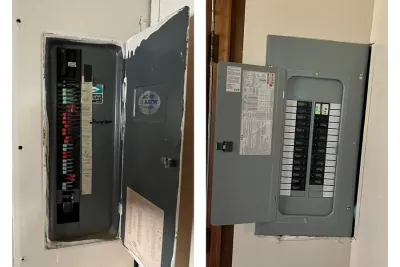
Panel Upgrades & Replacements
Professional electrical panel upgrades and replacements in Snohomish County. Licensed electricians, same-day estimates, transparent pricing.
Learn More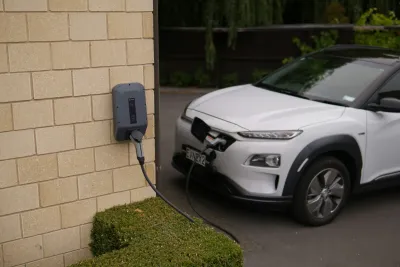
EV Charger Installation
Home EV charger installation in Snohomish County. Level 2 charging, Tesla Wall Connector, panel upgrades included. Licensed electricians.
Learn More
Emergency Electrical Service
24/7 emergency electrician in Monroe, WA. Licensed, bonded, insured. We'll call you back today.
Learn MoreReady for Backup Power?
Contact us today for a free consultation and see why Snohomish County trusts Phase 3 Electric.
Request Service